
VA or Conventional Loan: Which Mortgage for Veterans Fits
For most eligible veterans buying a home they will live in, a VA loan is the cheaper mortgage. The Department of Veterans Affairs does not require a down payment when the price is at or below the appraised value, and it does not require private mortgage insurance. A conventional loan can still be the better fit if you are putting 20% down, buying a second home or rental, or the house will not meet VA property rules.
That is the real choice behind a search for a VA or conventional loan. Both can get a veteran into a house. They price risk in different ways, and the cheaper path depends on cash, occupancy, and whether you already used the VA benefit.
Down payment: $0 on VA, more on conventional
VA-backed purchase loans can close with no down payment as long as the sales price is not higher than the home’s appraised value, according to the VA purchase loan page. Lenders can still ask for a down payment in some cases. VA itself does not require one.
A conventional loan is not guaranteed by VA, FHA, or USDA. The same VA page notes that private mortgage insurance is usually required on conventional loans when the down payment is less than 20% of the home’s price. Putting 20% down is the usual way to skip that monthly cost.
If cash is tight, the VA option usually wins on day one. If you already have a large down payment, run both numbers. A smaller loan balance can offset a conventional rate or fee difference.
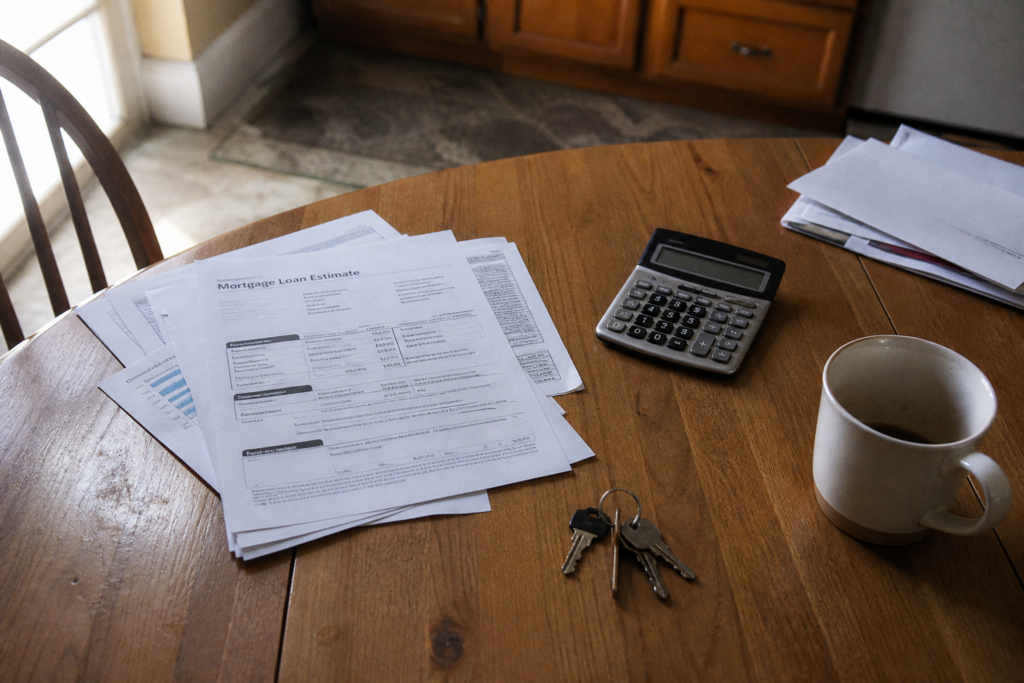
PMI vs the VA funding fee
Conventional lenders usually require PMI when the down payment is under 20%. PMI protects the lender, not you. The Consumer Financial Protection Bureau says you can request cancellation once the balance is scheduled to reach 80% of the home’s original value, and the servicer must drop PMI automatically at 78% if you are current.
VA loans do not use PMI or FHA mortgage insurance premiums. Instead, most borrowers pay a one-time VA funding fee. You can pay it at closing or roll it into the loan. VA’s own example: a first-use purchase of a $200,000 home with a $10,000 (5%) down payment carries a $2,850 fee, which is 1.5% of the $190,000 loan amount.
Current VA purchase funding fee rates, effective April 7, 2023 and still posted on VA.gov:
| Down payment | First use | After first use |
|---|---|---|
| Less than 5% | 2.15% | 3.3% |
| 5% or more | 1.5% | 1.5% |
| 10% or more | 1.25% | 1.25% |
You do not pay the fee if you receive VA compensation for a service-connected disability, if you are eligible for that compensation but take retirement or active-duty pay instead, if you receive DIC as a surviving spouse, or in the other exemption cases listed on the same VA page. VA News reported that since 2021, more than half of veterans who closed a VA-guaranteed loan were exempt.
That exemption changes the math. A disabled veteran with no funding fee and no PMI is hard to beat with a conventional loan unless the property type or occupancy rules get in the way. A subsequent-use VA loan at 3.3% with nothing down is the case worth comparing against a conventional loan with a modest down payment.
Rates and closing costs
VA does not set your interest rate. Your lender does. The VA purchase page says VA-backed loans often come with better terms and rates than other loans from private lenders. That is a program claim, not a guaranteed spread, so the only honest move is to price both products on the same day with the same credit file.
Closing costs work differently too. On a VA purchase, you can finance the funding fee. You cannot finance the rest of the closing costs, per VA.gov. Sellers can pay closing costs, and VA caps seller concessions at 4% of the home’s reasonable value. Conventional seller-credit rules depend on the loan, so the allowed credit is not the same on every file.
Neither loan type has a VA-style prepayment penalty on a standard purchase. VA states there is no penalty for paying the loan off early.
Credit flexibility on a mortgage for veterans
VA does not set a minimum credit score. The VA Home Loan Guaranty Buyer’s Guide says VA does not require a minimum score, and that most lenders still use one to price the loan. The same guide notes lenders often look for about 620 unless there is a larger down payment. Shop lenders. Overlays differ.
If your score is below what a conventional lender will accept, a VA loan is often the product that can still close. If you have strong credit and a large down payment, price both. The VA guide is the rule. The conventional overlay is the lender’s.
VA also underwrites residual income, not just debt-to-income. That residual-income test is one reason veterans with student loans or a shorter credit history can still qualify when a conventional automated finding comes back thin.
When a conventional loan can make more sense
A VA loan has to be for a home you will occupy. The VA purchase loan page requires that you will live in the home. Active-duty occupancy rules can be met by a spouse or, in some cases, a dependent child. If you want a vacation house or a rental, conventional is the path. VA will not guarantee that purchase.
Conventional also wins when the house will not pass a VA appraisal for condition. VA minimum property requirements are meant to keep the home safe, sound, and sanitary. A fixer that needs major work, or a condo that is not on the VA-approved list, can stall a VA file. A conventional loan, or a renovation product, is often cleaner there. UHLS also offers VA renovation when the repairs fit that program.
The other common case is a large down payment plus strong credit. Put 20% down on a conventional loan and you skip PMI and skip the VA funding fee. Compare that total cost to a $0-down VA loan that adds 2.15% (first use) or 3.3% (later use) to the balance. On a subsequent-use VA loan with no exemption, the fee alone can erase the monthly advantage if you were going to bring cash anyway.
Entitlement matters too. VA is a lifetime benefit, and you can use it more than once after you sell or refinance, as VA explains on the purchase page. If part of your entitlement is still tied up in another VA loan, your no-down-payment room can shrink. A conventional loan keeps that entitlement free for a later primary residence.
How to compare the two on the same house
Ask for two Loan Estimates on the same property, same purchase price, same credit report:
- VA with $0 down, funding fee financed, unless you are exempt
- Conventional with the down payment you can actually write a check for
Look at cash to close, the monthly payment after taxes and insurance, and the balance you will still owe. Then decide whether you would rather keep cash in reserve or buy down the loan size. If you are exempt from the funding fee, the VA side is usually obvious. If you are not, the subsequent-use 3.3% fee is the number that most often makes conventional worth a second look.
United Home Loan Services works with veterans in Greenville and the Southeast on both products. Start with the VA loan overview, or talk through a side-by-side with a loan officer before you write an offer.